OpenAI started showing sponsored ads in ChatGPT on 9 February 2026. Ten days later, ad intelligence firm Adthena confirmed the placements appear from a user's very first message. No conversation context. No browsing history. Type a question, and branded content shows up alongside the AI's answer. First-wave advertisers include Target, Ford, Adobe, Expedia, and Qualcomm, each paying a $60 CPM with a $200,000 minimum commitment.
ChatGPT just became an advertising platform. And that changes the maths for every business with a website.
Here's why: the organic space where ChatGPT recommends businesses, products, and services now sits directly above paid placements. For UK small businesses that can't write a $200,000 cheque, AI visibility through AI discovery files is the only way into those answers. Right now, 93% of websites haven't even started.
What ChatGPT Ads Actually Look Like
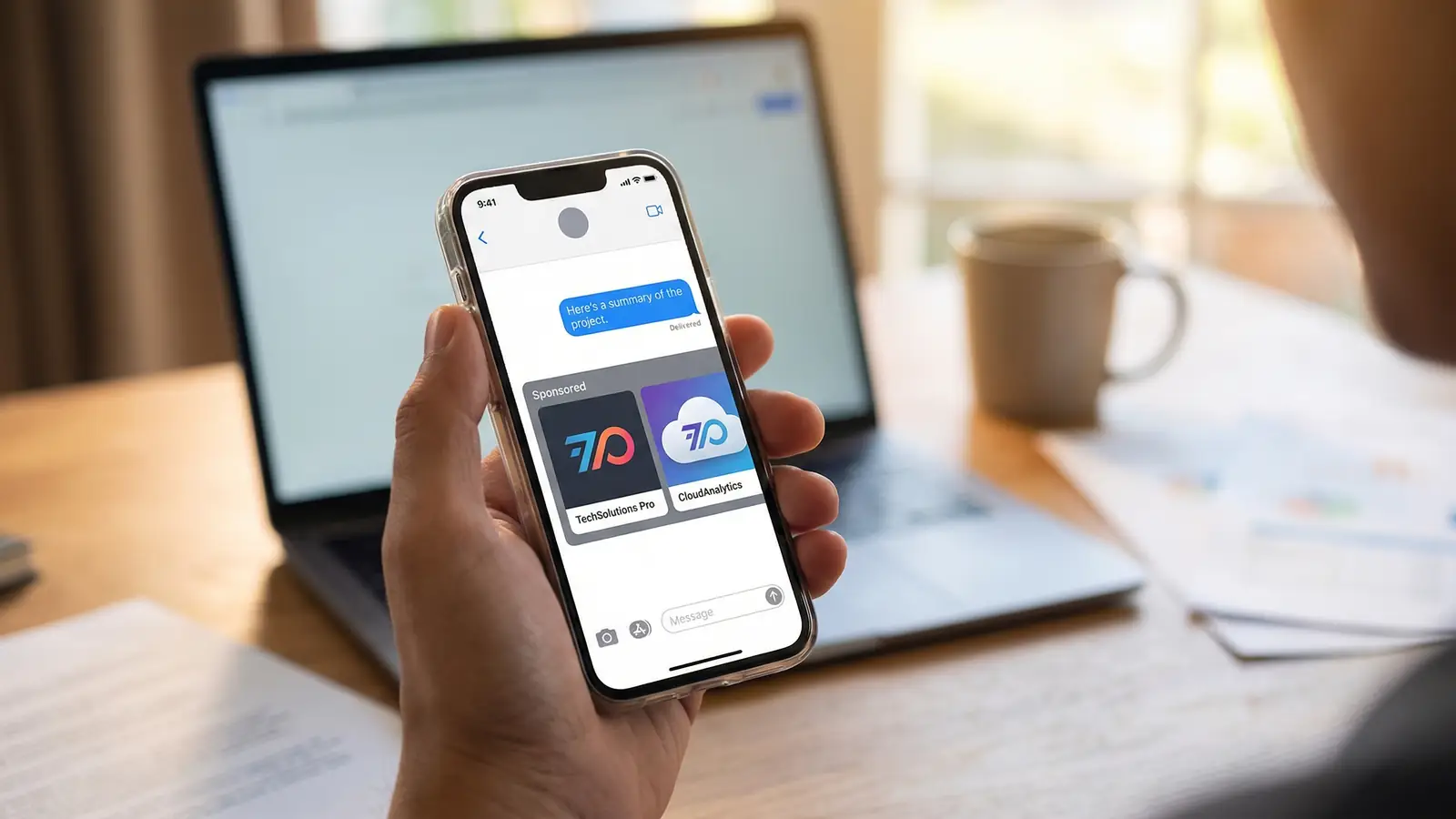
According to Search Engine Land's analysis on 19 February, the ads appear at the end of ChatGPT's responses. Each one carries a prominent brand favicon, a clear "Sponsored" label, and product information tailored to the question asked. When someone asks "What's the best way to book a weekend away?", Expedia's sponsored placement appears right there in the answer.
The format differs from what OpenAI previewed earlier. These aren't subtle text links. They're branded cards with visual elements, designed to catch attention inside a conversational flow. OpenAI says the ads don't influence what ChatGPT actually tells you: "Ads do not influence the answers ChatGPT gives you. Answers are optimised based on what's most helpful to you."
That distinction matters. The organic answer stays independent. The ad sits below it. Two separate channels, one screen.
Who Sees Ads, Who Doesn't
Ads appear for users on two tiers: the free plan and the Go plan ($8/month). That covers the vast majority of ChatGPT's 800 million weekly users.
Users on Plus ($20/month), Pro ($200/month), Business, Enterprise, and Education tiers won't see ads during this beta. OpenAI also blocks ads on sensitive topics: no placements in health, mental health, or political conversations. Advertisers can't promote dating services, financial products, health products, or political content.
On the privacy front, OpenAI states that conversations stay private from advertisers. Chats, history, memories, names, emails, precise location, IP addresses, and sensitive information aren't shared. But if a user has ad personalisation turned on, ChatGPT can use memories and recent conversations to select which ads to show.
Sam Altman addressed criticism directly. When Anthropic aired a Super Bowl ad that appeared to mock AI advertising hours before the ChatGPT ads launched, Altman responded: "Anthropic serves an expensive product to rich people...we are doing that too, but we also feel strongly that we need to bring AI to billions of people who can't pay for subscriptions."
The $200,000 Problem for UK Businesses
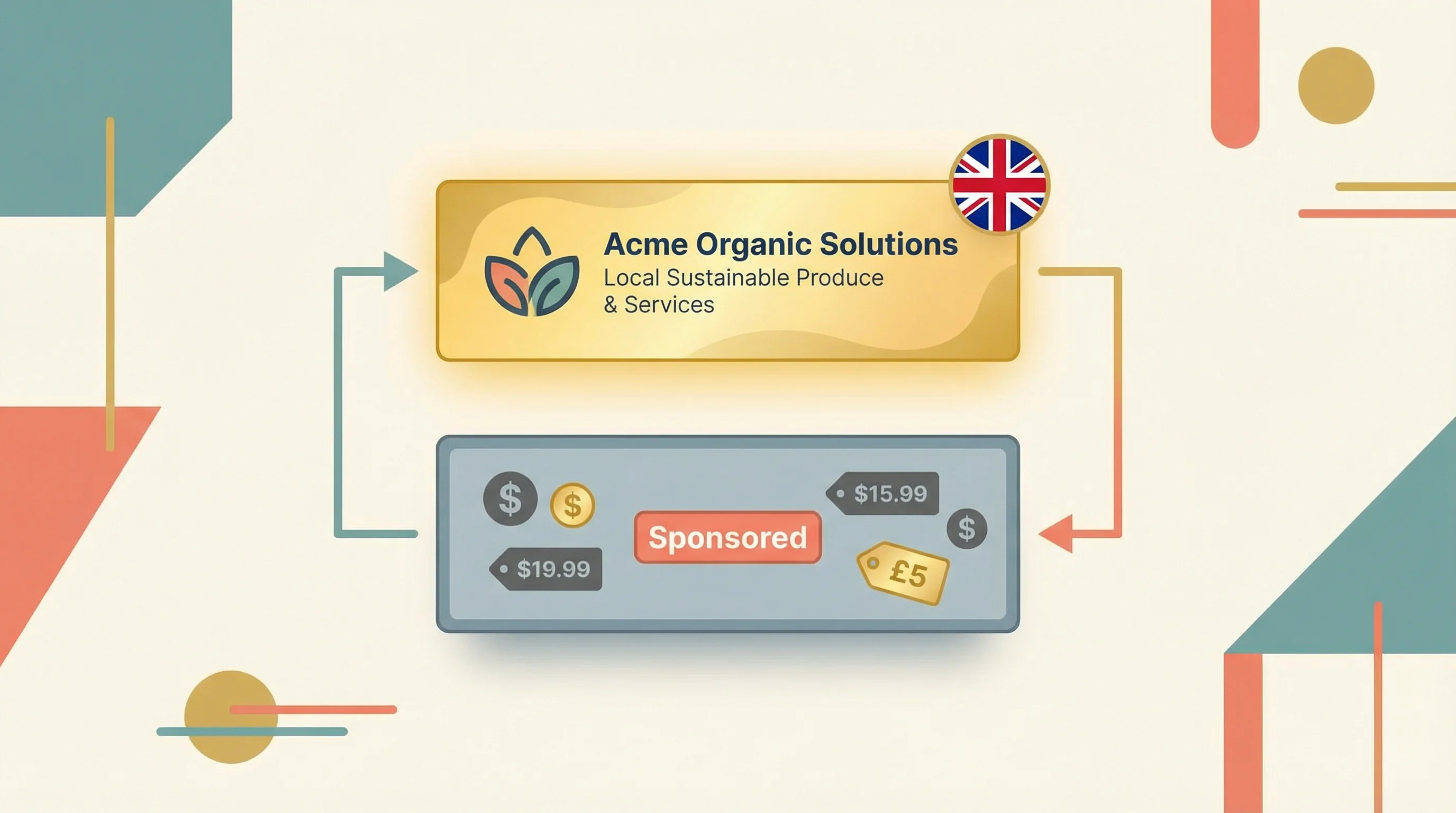
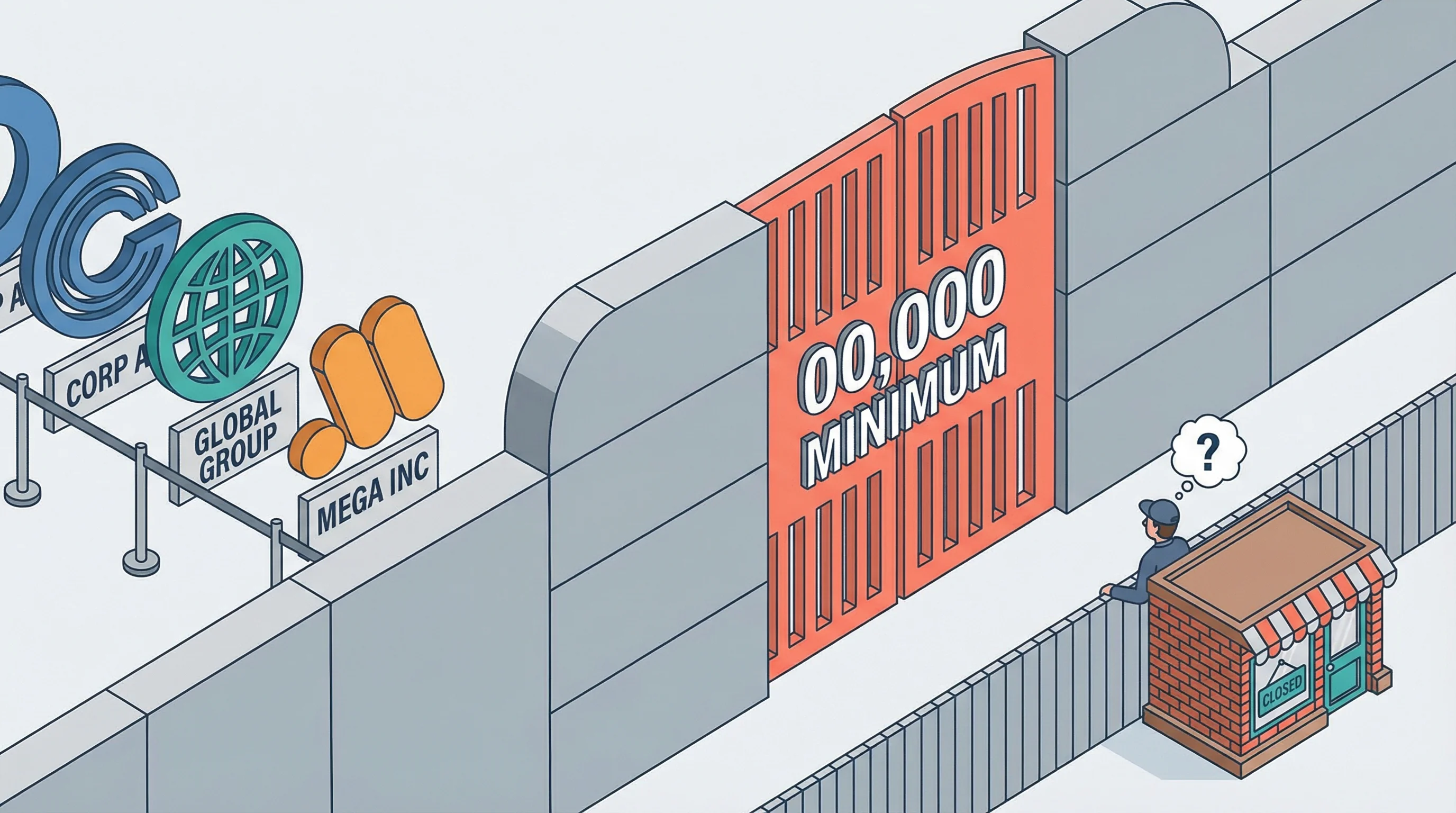
The $60 CPM puts ChatGPT ads in the same bracket as NFL broadcast slots and premium streaming. That's three times what Meta typically charges. And the $200,000 minimum entry means this isn't a channel small or medium businesses can buy into.
Phillip Thune, CEO of ad intelligence firm Adthena, told Digiday: "The only clients we've heard that have been approached are the biggest of the big."
For a UK plumber, accountancy firm, bakery, or web design studio, there's no route into ChatGPT's paid ad programme. Not at these prices. Not at this stage.
But the organic answer slot? That's a different story.
The Organic Slot Above the Ads Is Free
When someone asks ChatGPT a question about a product, service, or local business, the AI generates an answer before it shows any ads. That answer pulls from what ChatGPT knows about the business. And what it knows depends almost entirely on what your website tells it.
This is where AI discovery files come in. They're structured text and JSON files you place on your website that tell AI systems who you are, what you do, where you operate, and how to describe your brand. When ChatGPT visits a site with proper AI discovery files, it gets verified facts it can cite with confidence. When it visits a site without them, it guesses from raw HTML.
Before ads existed in ChatGPT, the distinction between being visible to AI and being invisible was important. Now it's worth money. The organic answer slot sits above a paid placement that costs brands $60 per thousand views. Your business can appear in that organic slot for nothing, provided you've done the work to make yourself visible.
"Today websites are not just used to provide information to people, but they are also used to provide information to large language models."
Jeremy Howard, Answer.AI (llms.txt specification author)
Jeremy published the llms.txt specification in 2024. What he described as a direction is now the reality: AI platforms are monetised media channels, and the organic position within them has a measurable value. The research backs this up. ChatGPT now processes 1.6 billion daily search queries, roughly 12% of Google's volume. But it sends 190 times less traffic to websites, with a click-through rate of just 1.3% compared to Google's 29.2%. When ChatGPT does recommend a business, that recommendation carries weight because there's no page of ten results. There's one answer.
Nate Elliott, Principal Analyst at eMarketer, forecasts 40 million new generative AI users in the US alone between now and 2029. As that audience grows, so does the value of appearing in organic AI answers.
We've been writing about this shift since ChatGPT search went free in January. The ads announcement turns what was already important into something urgent. The organic answer slot above ChatGPT ads is free, but only if AI can find and understand your business.

What UK Businesses Should Do Right Now
You can't buy your way into ChatGPT's organic answers. But you can earn your way in. Here's how.
1. Check your current AI visibility. The AI Visibility Checker scans your website for all ten AI discovery file types, validates each one, and shows a live ChatGPT snapshot of what the AI currently says about your business. It takes under a minute. If ChatGPT doesn't know your business exists, you'll see that immediately.
2. Create your AI discovery files. Start with llms.txt and identity.json. These two files give AI systems the most useful structured data about who you are and what you offer. The full specifications cover all ten file types. If you're on WordPress, we've built a free plugin that generates them automatically.
Generate AI Discovery Files from your dashboard
Using WordPress? Install the plugin and create all 10 files in minutes. No coding, no configuration files to edit manually.
Get the Plugin →3. Get listed in the AI Discovery Files Directory. The AI Visible Directory at ai-visibility.org.uk gives you a verified listing with a dofollow backlink and a badge for your site. It tells AI systems that your business has been verified and your files validated.
None of this costs anything. The specifications are open. The checker is free. The directory is free. The only cost is the time to do it properly, and that's measured in hours, not months.
Compare that with the $200,000 minimum to buy a ChatGPT ad. The maths isn't complicated.
What to Watch Next
OpenAI's ad rollout is US-only for now. Sarah Friar, OpenAI's CFO, told CNBC the company is focused on "practical adoption" in 2026. Internal projections forecast a billion dollars in ad revenue this year, with analysts estimating $25 billion annually by 2030.
Google has also told advertisers it plans to bring ads to Gemini in 2026. If both ChatGPT and Gemini become ad-supported, the organic answer slot in AI conversations becomes the single most contested piece of free real estate in digital marketing. AI discovery files aren't SEO. They're a different discipline with different rules. But they serve the same purpose: making sure your business shows up where people are looking.
Right now, 99.7% of UK websites are invisible to ChatGPT. That was a problem before ads arrived. Now it's a missed opportunity with a dollar value attached to it.
Frequently Asked Questions
When did ChatGPT start showing ads?
OpenAI began testing ads in ChatGPT on 9 February 2026 for US users on the Free and Go tiers. By 19 February, Adthena confirmed ads were appearing from users' very first messages, before any conversational context had been established.
Who sees ads in ChatGPT?
Free-tier users and Go subscribers ($8/month) in the US see ads during the current beta. Plus ($20/month), Pro ($200/month), Business, Enterprise, and Education subscribers don't see ads. OpenAI also blocks ads in health, mental health, and political conversations.
How much do ChatGPT ads cost?
The beta runs at $60 CPM (cost per thousand views) with a $200,000 minimum commitment. That's roughly three times Meta's typical CPMs and comparable to premium streaming or NFL broadcast ad rates. First-wave advertisers include Target, Ford, Adobe, Expedia, and Qualcomm.
Can UK small businesses buy ChatGPT ads?
Not currently. The $200,000 minimum locks out most small and medium businesses. The beta is US-only and limited to large brands approached directly by OpenAI. There's no self-serve ad platform yet. For UK businesses, organic AI visibility through AI discovery files is the available route.
Can my business appear in ChatGPT answers without paying for ads?
Yes. ChatGPT's organic answers are separate from its ad placements. When the AI recommends a business, it does so based on what it knows from your website, not advertiser payments. AI discovery files help ChatGPT understand your business accurately, increasing the chance of organic recommendations. Use the free AI Visibility Checker at ai-visibility.org.uk to see where you stand.
What are AI discovery files and how do they help?
AI discovery files are structured text and JSON files (like llms.txt, identity.json, brand.txt, and faq-ai.txt) that you place on your website. They tell AI systems who your business is, what you offer, where you operate, and how you want to be described. The specifications are published openly at ai-visibility.org.uk/specifications/ and free to implement on any platform.
Do ChatGPT ads influence the AI's answers?
OpenAI states that ads don't influence ChatGPT's answers: "Answers are optimised based on what's most helpful to you." Conversations also remain private from advertisers. The organic answer and the sponsored placement are independent of each other.
How many search queries does ChatGPT handle?
ChatGPT processes around 1.6 billion daily search queries, approximately 12% of Google's volume. It has 800 million weekly active users. However, it sends 190 times less traffic to websites than Google, with a click-through rate of about 1.3% compared to Google's 29.2%. This makes each individual recommendation more concentrated in its impact.
Can ChatGPT find your business?
ChatGPT is now an ad platform. The organic answer slot above those ads is free, but only if AI can actually find you. Our free AI Visibility Checker scans your site in seconds and tells you exactly what AI models can see.
Check Your AI VisibilitySources
- Testing Ads in ChatGPT - OpenAI (9 February 2026)
- ChatGPT Ads Spotted and They Are Quite Aggressive - Search Engine Land (19 February 2026)
- ChatGPT Ads Now Hit on Your Very First Message - WinBuzzer (21 February 2026)
- ChatGPT Rolls Out Ads - TechCrunch (9 February 2026)
- OpenAI Introduces Ads - The Register (10 February 2026)
- OpenAI's Cautious Approach to ChatGPT Ads - Digiday (5 February 2026)
- ChatGPT Now Has 12% of Google's Search Volume - ALM Corp
Published: · Last reviewed: · Written by: Mark McNeece, Founder & Managing Director, 365i
Editorially reviewed by: Mark McNeece on · Our editorial standards