Update (April 2026): A lot has changed since this was first published in May 2025. ChatGPT is now on GPT-5.4 ($20/month Plus, $2.50/$15 per million tokens API). Claude shipped Opus 4.7 on 16 April 2026 ($20/month Pro, $5/$25 API, 1M context at standard pricing) plus Sonnet 4.6 in February ($3/$15 API, leads office and finance work). Manus was acquired by Meta in late 2025 for an estimated $2 billion. It has since shipped a Web App Builder, a desktop app with local file access, and credit-based pricing: free tier with 300 daily credits, Basic $19/month for 1,900 credits, Plus $39/month for 3,900 credits, Pro $199/month for 19,900 credits. The verdicts and category-by-category narrative below are from the original May 2025 testing. Pricing and the bottom-line recommendation have been updated.
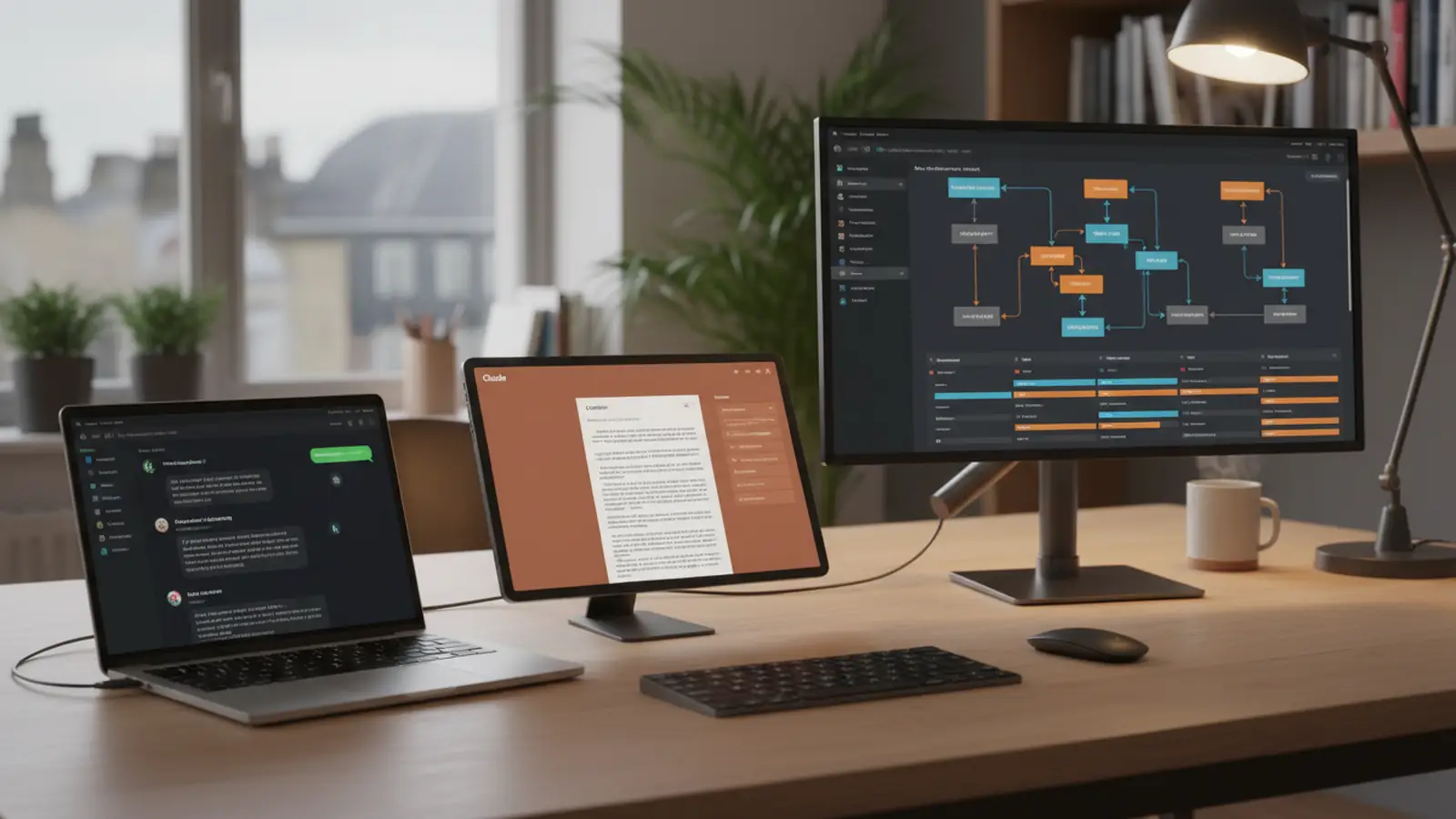
There are now more AI assistants than anyone can reasonably test. So I narrowed it down to three that take genuinely different approaches: ChatGPT (the generalist), Claude (the thinker), and Manus (the automation agent). I've used all three for real client work over the past few months, not toy demos.
What I found surprised me. The "best" AI isn't a single tool. It depends entirely on what you're doing, and each of these three has a clear strength that the others can't match.
Three Very Different Philosophies

ChatGPT by OpenAI is the Swiss army knife. It does everything reasonably well: writing, coding, image generation, web browsing, data analysis. GPT-4o is the current engine, and it's fast. You ask a question, you get an answer. It won't blow you away in any single category, but it rarely lets you down either.
Claude by Anthropic takes the opposite approach. It's slower, more deliberate, and consistently produces more thoughtful output. Give it a 40-page document and ask for the three most important insights? Claude will find things the others miss. I use it daily for WordPress development via Claude Code, and the difference in code quality is noticeable.
Manus is the odd one out. It's not really a chatbot. It's an AI agent that automates workflows: publishing content, formatting posts, researching keywords, scheduling across platforms. You don't have a conversation with Manus. You give it a task and it does it, often across multiple tools simultaneously.
Writing and Content: Where Words Matter
I gave all three the same brief: write a 500-word page for a managed cloud hosting service, targeting UK business owners who've outgrown shared hosting.
ChatGPT delivered the fastest usable draft. Clean structure, natural language, appropriate detail level. It needed light editing and was ready to publish within 10 minutes. For sheer speed and polish on standard content tasks, nothing beats it.
Claude wrote something different. Longer. More specific. It added a GDPR compliance angle I hadn't mentioned in the brief, drew a practical comparison with VPS hosting that strengthened the argument, and structured the piece around the reader's likely objections rather than just listing features. The draft needed trimming, but the raw quality was higher.
Manus doesn't write articles the way ChatGPT or Claude do. It can draft content as part of an automated pipeline, but the writing quality sits below both. Where Manus excels is turning a rough draft into a formatted, SEO-optimised, scheduled post across multiple platforms without you touching it again.
"The best AI for business isn't the one with the most parameters. It's the one that understands what you're actually trying to accomplish and helps you get there faster."
Ethan Mollick, Professor at Wharton School, One Useful Thing
That captures it perfectly. I've spent over 20 years building websites for businesses, and the tool that saves the most time isn't always the most impressive on paper. ChatGPT's speed on routine content means I can draft three product pages in the time it used to take for one. But when the brief is complex, or the stakes are high, or the document needs to sound like an actual person wrote it, Claude produces better work.
Coding: The Practical Test

The test: fix a WordPress plugin throwing PHP 8.4 deprecation warnings, then add a settings page with proper nonce verification and capability checks.
Claude was the standout. It flagged a security issue I hadn't spotted, suggested a more maintainable approach to the settings registration, and included comments explaining why each decision was made. The code followed WordPress coding standards without being asked. This is why I use Claude Code for all my platform development work. The code just works, first time, more often than not.
ChatGPT produced working code that missed one nonce check and used a deprecated sanitisation function. Good enough for prototyping. You'd want to review it before production.
Manus can execute code changes as part of automated workflows, but it's not built for the back-and-forth of debugging a tricky plugin issue. Different tool, different job.
Automation: Where Manus Pulls Ahead
This is Manus's territory, and it's not close. While ChatGPT and Claude are conversation tools (you ask, they answer), Manus is an execution tool. You define a workflow and it runs it.
Example from a real project: 15 technical blog posts needed publishing within a fortnight. I used Claude to write the content, ChatGPT to generate featured images, and Manus to handle everything else. SEO metadata, internal linking suggestions, scheduling, formatting, cross-posting to social channels. Manus handled the entire publishing pipeline while I focused on writing and review.
The setup wasn't simple. Getting Manus configured with WordPress, Google Workspace, and the content calendar took a full afternoon. The documentation is sparse. But once it was running, it saved hours every week on tasks that were tedious but necessary.
If you're publishing regularly (whether that's blog content, product updates, or company news), the automation angle is worth considering. If you publish once a month, it's overkill.
Integration and Ecosystem
ChatGPT has the broadest ecosystem. Web browsing, code interpreter, DALL-E image generation, GPTs (custom assistants), and a growing plugin marketplace. It connects to nearly everything, which makes it the default choice for most businesses.
Claude takes a focused approach. Fewer integrations, but the ones it has are deep. Document analysis is superb. The API is clean. Claude Code (the CLI tool) has changed how I work with codebases entirely. Where ChatGPT goes wide, Claude goes deep.
Manus integrates with the tools content teams actually use: WordPress, Google Workspace, Slack, social scheduling platforms. The integration is the product. Without it, Manus is just a mediocre chatbot. With it, it's a genuine force multiplier for content operations.
Privacy and Data Handling
This matters more than most comparisons acknowledge. You're pasting client briefs, business data, and sometimes sensitive information into these tools.
"When evaluating AI tools, the question isn't just 'what can it do?' but 'what happens to my data after I hit send?' That's especially critical for businesses handling customer information."
Bruce Schneier, Security Technologist, Schneier on Security
Schneier's been making this point for years, and it's only become more relevant with AI. Here's how the three compare:
Claude leads on privacy. Anthropic's approach is privacy-first by design. Your data isn't used for training by default. The system flags potentially sensitive content and handles it carefully. For client work involving confidential information, Claude is my default.
ChatGPT has improved. Paid plans don't train on your data by default, and the privacy controls are granular. The Microsoft enterprise backing adds a layer of trust for larger organisations. But the default settings are more permissive than Claude's, so check your account settings.
Manus takes a different approach: your data stays within your ecosystem. Because it integrates with your existing tools rather than processing everything through its own servers, there's less data exposure. That said, review their privacy policy carefully. Newer companies haven't had the scrutiny that OpenAI and Anthropic face.
What They Cost
| Tool | Current Model / Tier | Consumer Plan | Best For |
|---|---|---|---|
| ChatGPT | GPT-5.4 | Plus $20/month, Pro $200/month | General business use, image generation |
| Claude | Opus 4.7 / Sonnet 4.6 | Pro $20/month, Max $100+/month | Research, writing, coding |
| Manus | Post-Meta-acquisition | Free 300 daily credits; Basic $19/mo (1,900 credits); Plus $39/mo (3,900); Pro $199/mo (19,900) | Content automation, autonomous web tasks |
The 2025 prices in pounds have been replaced with current dollar pricing. ChatGPT Plus and Claude Pro both sit at $20/month and remain the value benchmarks. Manus moved to credit-based pricing after the Meta acquisition: the free tier now includes 300 daily credits which covers genuine evaluation use. Credit consumption ranges from 10 to 200 credits per task depending on complexity, so the right plan depends on how many autonomous workflows you actually need to run per month.
The real question isn't which is cheapest. It's which saves you the most time. A tool that costs $20/month and saves you 30 minutes a day pays for itself before lunch on the first day.
Which One Should You Choose?

Start with ChatGPT Plus if you're subscribing to one tool. It's the most versatile across writing, coding, image generation, and research. The plugin ecosystem means it connects to nearly everything you already use.
Add Claude Pro if you regularly work with long documents, need high-quality writing, or do any development work. The difference between Claude's output and ChatGPT's on complex tasks is noticeable enough to justify the second subscription. I use both daily and they complement each other well.
Consider Manus if you're publishing content at scale. Agencies, media companies, and businesses with active blogs will benefit from the automation. Solo operators or businesses that publish occasionally won't get enough value to justify the setup time.
My working stack: Claude for thinking (writing, coding, research, analysis), ChatGPT for doing (images, quick drafts, browsing, plugins), and Manus for shipping (formatting, scheduling, cross-posting). Three tools, three jobs, no overlap.
The companies getting the most from AI in 2025 weren't the ones with the best single tool. They were the ones that figured out which tool fits which task. That's still the comparison worth making in 2026, even though the model lineup has rotated through several major releases since this article first published.
Frequently Asked Questions
Should I choose ChatGPT or Claude for my business?
ChatGPT if you need one versatile tool for everything. Claude if writing quality, research accuracy, or coding reliability is your priority. Most businesses that try both end up keeping both, since they're strong in different areas.
What is Manus AI and how is it different from ChatGPT?
Manus is an AI agent that automates workflows rather than having conversations. Where ChatGPT answers questions, Manus executes multi-step tasks: publishing content, formatting posts, scheduling across platforms. It's built for content operations teams who publish regularly.
Are paid AI tools worth the cost for small businesses?
Yes, if you use them regularly. ChatGPT Plus or Claude Pro at £18-20/month saves most users 30+ minutes daily on content, email, and research. That's a return within the first week. Free tiers work for occasional use but hit frustrating limits for daily business tasks.
Is my business data safe with these AI tools?
Claude and ChatGPT (paid plans) don't train on your data by default. Claude is the strongest on privacy by design. Always check your account settings, and never paste highly sensitive data (passwords, financial records, personal customer data) into any AI tool's free tier.
Can AI assistants replace employees?
No. AI assistants accelerate the work your team already does. They're best at drafting content, researching topics, generating ideas, and automating repetitive tasks. They can't replace human judgement, client relationships, or strategic thinking.
Do I need multiple AI subscriptions?
One is enough for most small businesses. Start with ChatGPT Plus for general use. Add Claude Pro if you need better writing or coding. Only add Manus if you're publishing content at volume and need workflow automation. Don't pay for tools you won't use weekly.
Which AI is better for coding, Claude or ChatGPT?
Claude produces more reliable, maintainable code and catches security issues that ChatGPT misses. ChatGPT is faster for quick prototypes. For anything going into production, especially WordPress development, Claude is the safer choice.
Fast Hosting for AI-Powered Workflows
Whether you're using AI to create content or build features, your website needs hosting that keeps pace. WordPress hosting with the latest PHP, built-in CDN, and expert support.
Explore WordPress HostingPublished: · Last reviewed: · Written by: Mark McNeece, Founder & Managing Director, 365i
Editorially reviewed by: Mark McNeece on · Our editorial standards